Medically: Women Aren't Just "Small Men"
November 2026
This month I'm stepping away from machining and medical devices to write about something my wife, Lynn, and I care deeply about: women's health, and premenstrual disorders in particular. It's part opportunity, part frustration, and part celebration, because we just awarded our second annual Women's Health Research & Innovation Scholarship, with help from five other donors.
For most of modern medical history, the default research subject was male, from lab mice to clinical trial patients. Women were treated as a scaled-down version of the same machine: adjust the dose for body weight and you're set. It's not that simple. Leaving cyclical hormone changes out of the equation has contributed to misdiagnosis, incorrect treatment, and real gaps in our understanding of the health of anyone with uterus/ovaries and a menstrual cycle.
The variable we left out
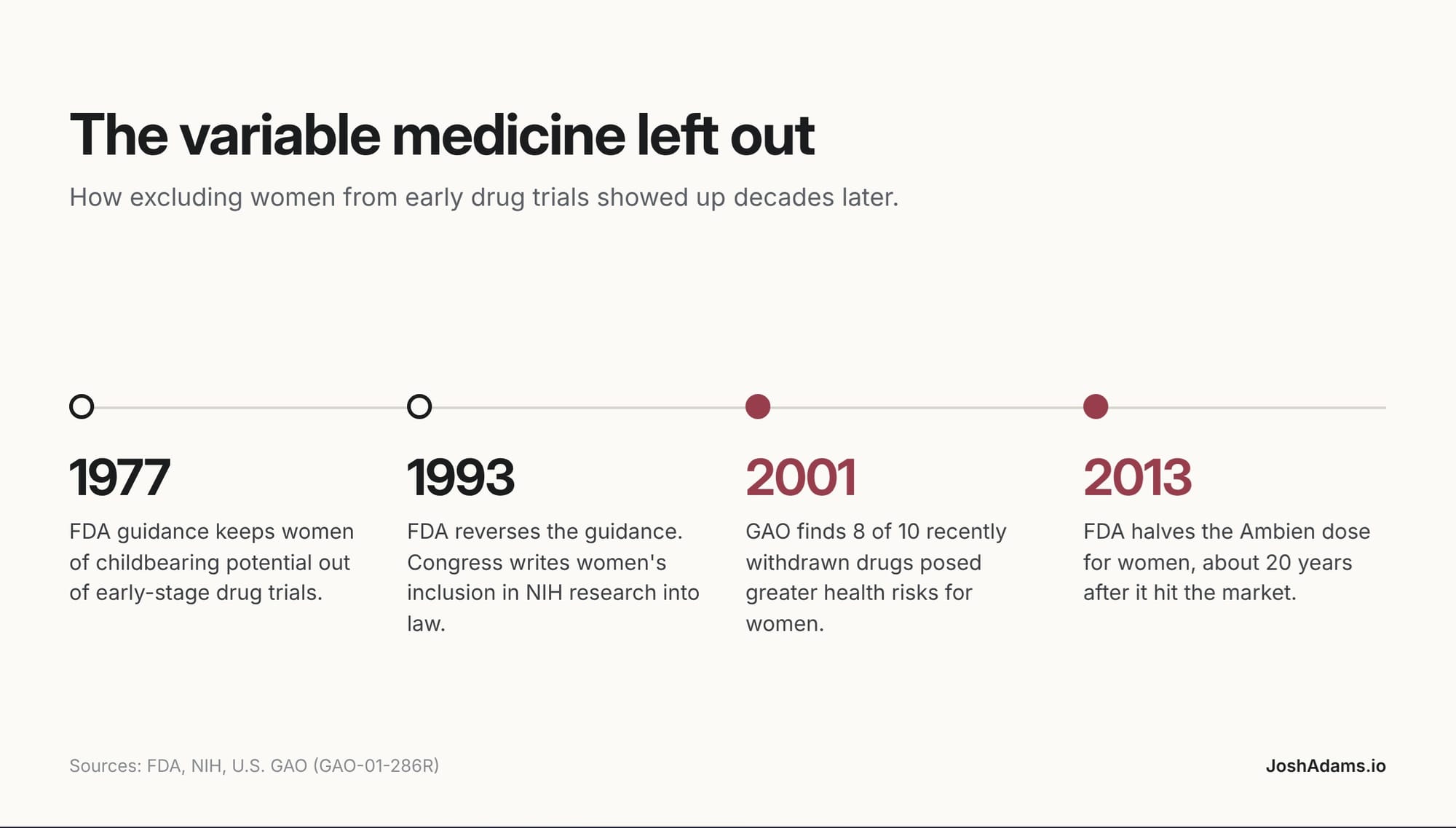
In 1977, after the thalidomide disaster globally caused many thousands of birth defects, the FDA recommended keeping women of childbearing potential out of early-stage drug trials. The intent was to protect pregnancies. The result was a generation of medicines tested largely on men, under guidance that stayed in place until 1993.
The costs showed up later. In 2001, the GAO found that eight of the ten prescription drugs pulled from the U.S. market since 1997 posed greater health risks for women. In 2013, the FDA cut the recommended Ambien dose for women in half because women clear it more slowly and were still impaired the next morning. Ambien had been on the market for about twenty years by then.
Pregnancy risk explains the rule for human trials. It doesn't explain the lab. A 2011 review found a male bias in 8 of 10 biomedical research fields. In neuroscience, male-only animal studies outnumbered female-only ones 5.5 to 1. The usual reason was that female hormone cycles add too much variability. In other words, we removed hormonal fluctuation as a variable specifically because it can change the results. Unfortunately, those differences are exactly what we need to understand to tailor medical care for women.
Here's a twist: when researchers analyzed hundreds of studies, female rats turned out to be no more variable than males on average. The cycle can still matter a lot for specific outcomes. It was never noise to filter out. It's an important signal. In 2016, the NIH began requiring researchers to consider sex as a biological variable in animal and human studies.
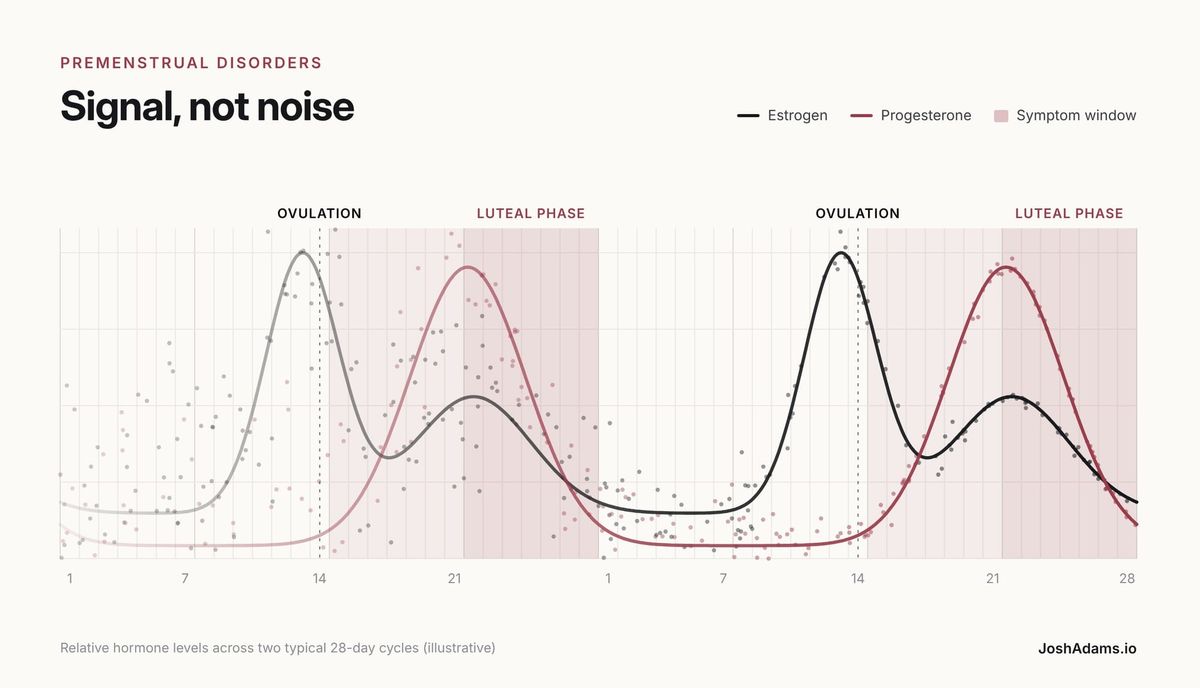
As an engineer, I get the instinct. When a system is messy, you hold variables constant so you can see what's going on. Hormones rise and fall over roughly four weeks and affect metabolism, mood, pain, and how drugs behave, so studying them properly takes more participants, more data, and more money. But at some point you have to put the variables back in, because the real system has them.
That's also why I see women's health as an enormous opportunity. A 2024 report from the McKinsey Health Institute and the World Economic Forum found that women spend about 25% more of their lives in poor health than men. Closing that gap could add roughly seven healthy days per woman per year and at least $1 trillion a year to the global economy by 2040. For researchers, clinicians, founders, and investors looking for meaningful work, I don't know many spaces this important, underserved, and with such a large and global Total Addressable Market.
Premenstrual Dysphoric Disorder (PMDD)
One clear example of what happens when the cycle gets left out is the lack of understanding and effective treatment of PMDD. If you haven't heard of it, you're not alone. Many doctors haven't either. In people who are susceptible, the normal hormonal shifts after ovulation trigger real emotional, cognitive, behavioral, and physical symptoms. It looks different from person to person, but common symptoms include deep sadness, sharp mood swings, emotional sensitivity, irritability, brain fog, fatigue, headaches, and body aches. A few days after a period starts, the symptoms lift. Then they come back, every month, often getting worse over the years.
The impact reaches into nearly every part of life: relationships, family, school, work, finances, and caregiving. Across a lifetime with nearly 500 menstrual cycles the healthcare cost, work impact and less tangible losses can be very significant.
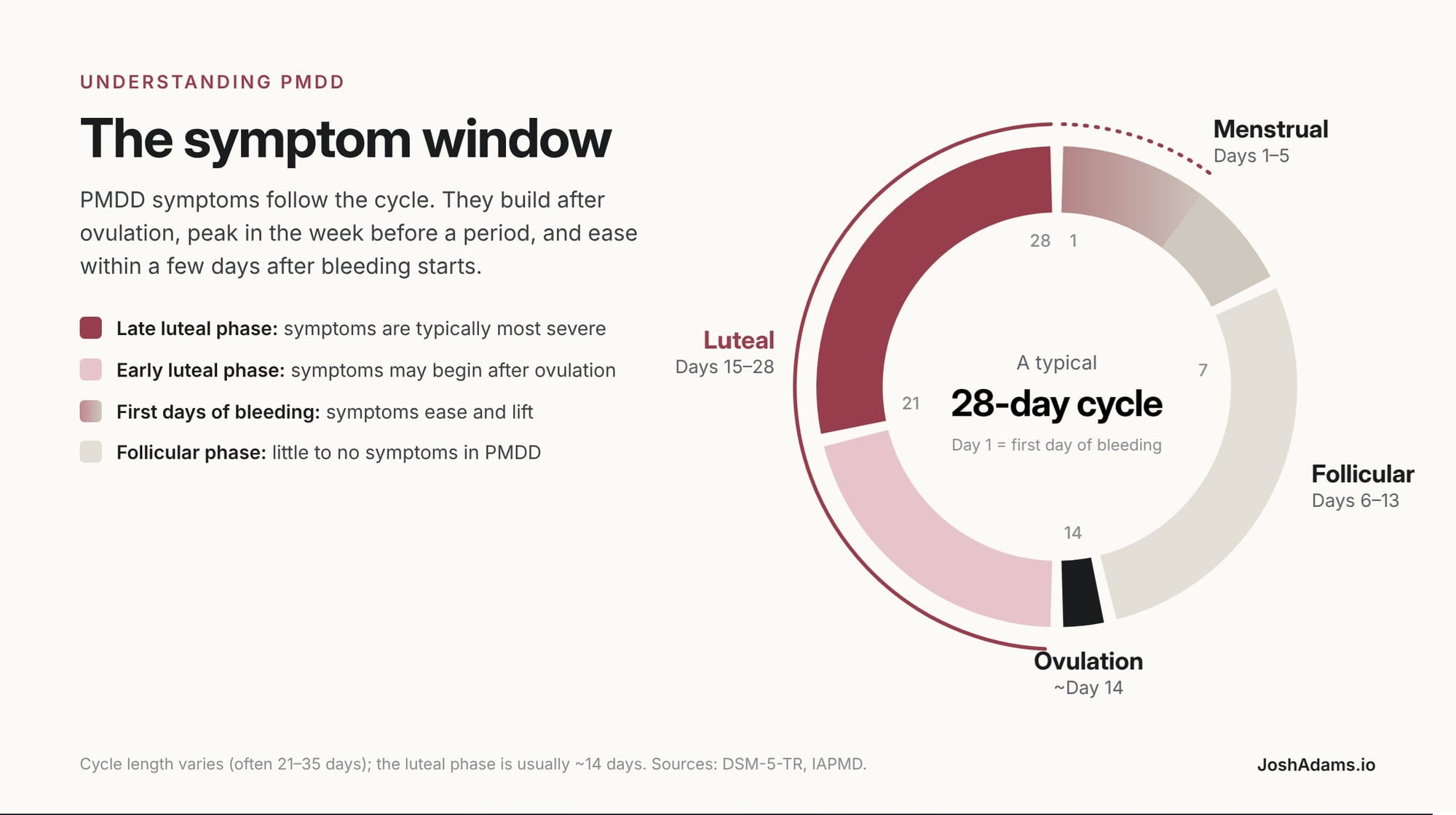
Surprisingly, PMDD isn't caused by abnormal hormone levels. People with PMDD usually have normal levels; their brains respond more severely to typical hormonal fluctuations. In 2017, an NIH team found that cells from women with PMDD respond differently to estrogen and progesterone at the gene expression level. That moves PMDD from "it's in your head" to "it's in your cells."
The International Association for Premenstrual Disorders (IAPMD) estimates that around 119 million people worldwide are affected by premenstrual disorders, such as PMDD and Premenstrual Exacerbation (PME), that's about one in twenty people who menstruate. A 2024 Oxford-led review of more than 50,000 people estimated that about 31 million meet the full diagnostic criteria for PMDD at any given time, and the authors believe that's an undercount.
Most people with PMDD don't know it. There's no blood test and diagnosis requires two months of daily symptom tracking, which most providers never ask for. In IAPMD's global survey, people waited an average of 12 years and saw about six providers before getting the right diagnosis, often after being misdiagnosed with depression, anxiety, or bipolar disorder or being told it's just "part of being a woman" or "just PMS."
The stakes are high. In a 2022 study of 599 people diagnosed with PMDD through daily tracking, 72% had experienced active suicidal thoughts and 34% had attempted suicide at some point in their lives. If you're reading this from a dark place right now, please call or text 988. You don't have to go through this alone.
PMDD has some existing treatment pathways that can provide some relief. Options include SSRIs, birth control pills, medications that pause the cycle, and surgery as a last resort, along with therapy, peer support, and diet, exercise and other lifestyle changes. Finding what works takes patience: each option can take months to evaluate, and symptoms can shift over the years.
There's some momentum in the space now with researchers testing drugs built around PMDD's biology rather than borrowing from depression care. In 2024, the PMDD Awareness and Research Act (H.R. 8160) was introduced in Congress to expand NIH research and clinician training. It's still in committee, but it's a start.
Some of the most important progress comes from individuals and families. Marybeth and Steve Bohn lost their daughter Christina to PMDD in 2021. My wife and I had the pleasure of meeting the Bohns and participating in their annual memorial 5k in honor of Christina. Their hard work helped establish Missouri's PMDD Awareness Day, the first in the country, and shared three questions Christina said could have helped her connect her symptoms to her cycle much sooner:
- When was your last period?
- When do you expect the next one?
- What is PMS like for you?

If PMDD is part of your life
If you need someone right now, call or text 988 (U.S. and Canada), or text HOME to 741741 for the Crisis Text Line. Both are free and available around the clock.
IAPMD (International Association for Premenstrual Disorders) is the best place to start. They run free peer support groups, keep a directory of PMDD-informed clinicians, and offer a printable symptom tracker. The Me v PMDD app does the same tracking on your phone and Bearable is a non-PMDD specific chronic health symptom tracking app. Two months of daily notes can effectively inform and guide a conversation with a doctor.
To help move the science forward, the NIMH runs PMDD studies and ClinicalTrials.gov lists trials recruiting now. The Christina Bohn Foundation works to raise awareness and support those affected. If policy is more your speed, the PMDD Policy Council was recently formed "to catalyze a national response to PMDD through policy that expands research, strengthens education, increases awareness, and improves lives" (full disclosure: Lynn and I are proud members, and we welcome you).
Women's Health Research & Innovation Scholarship
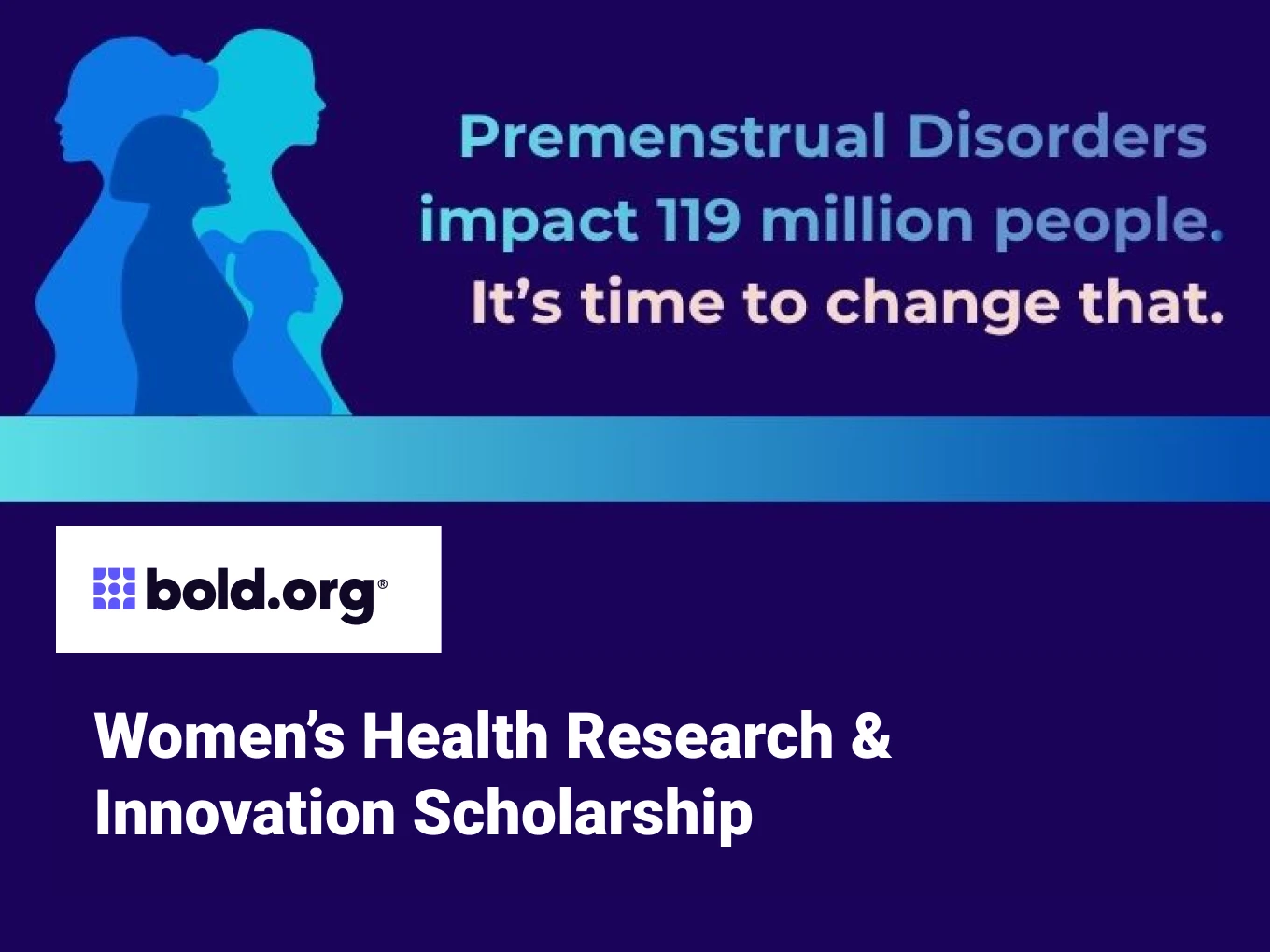
Lynn and I started the Women's Health Research & Innovation Scholarship on Bold.org to support students who see improving women's health as part of their calling. Our first winner, Kristina Stallings at the University of Pennsylvania, worked on a biotech kit for diagnosing early ectopic pregnancy and is now pursuing a PhD in immunology. This year we focused on PMDD and PME.
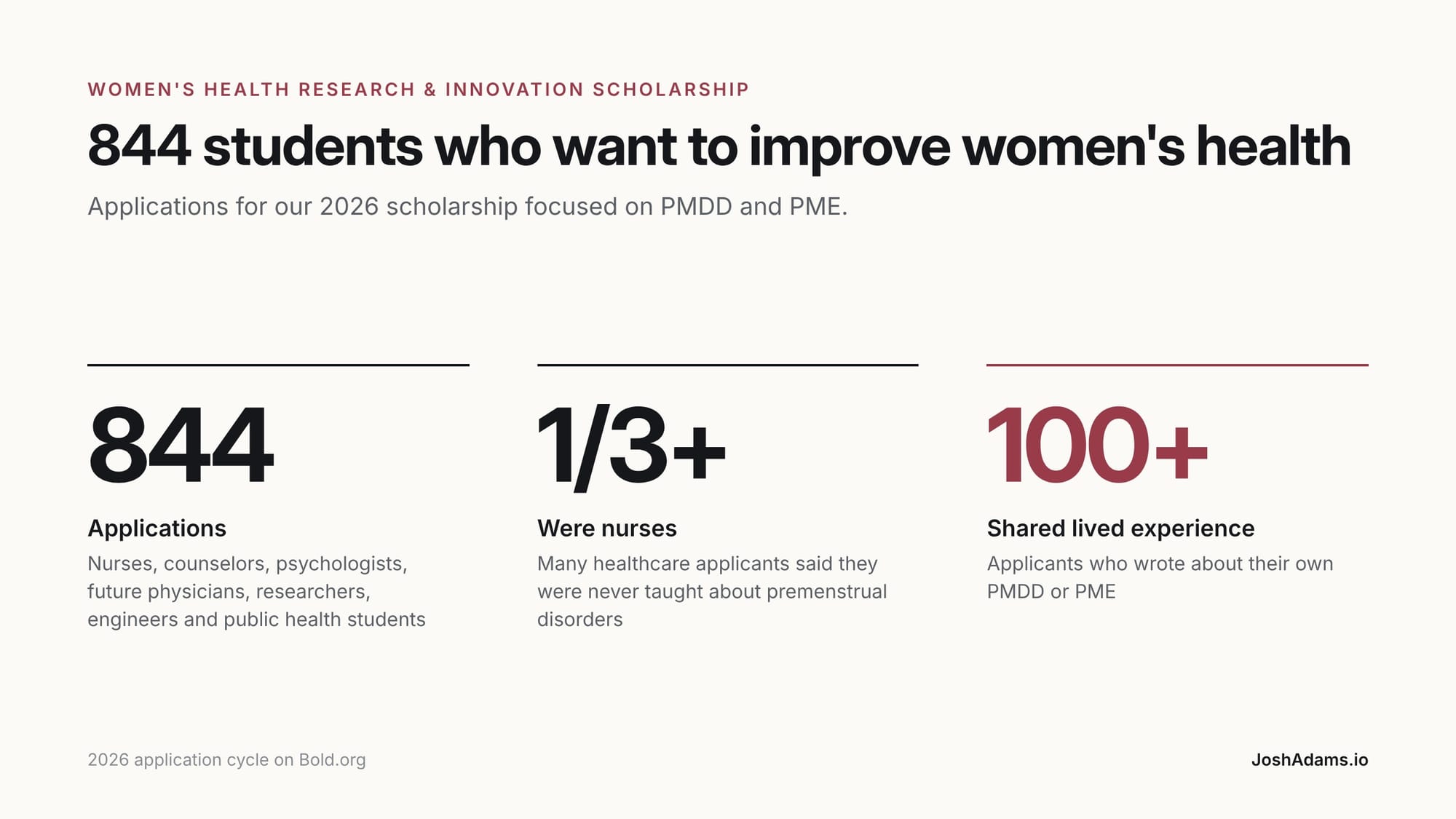
We were hoping for a solid stack of applications. We got 844.
Over a third came from nurses. Others came from counselors, psychologists, future physicians, researchers, engineers, and public health students. More than 100 applicants wrote about their own experience with PMDD or PME.
Reading them was hard at times. Applicants described years of misdiagnosis or being brushed off with "just PMS." Some wrote about hospitalizations, overdoses, and self-harm that arrived at the same point in the cycle every month. Many healthcare workers said they were never taught to consider the cycle's role in mood and behavior.
They were also full of ideas: emergency department and clinical training, a clinical trial for a new treatment, symptom-tracking apps and wearables, school and community education, policy advocacy, and screening tools for underserved communities. If you've wondered whether the next generation cares about this problem, they do.
This year's winner is Roan Bedoian, an American and Women's & Gender Studies student at Georgetown University. Roan wrote about her own experience in her essay, and she's already researching how popular culture shapes what women consider "normal" about their cycles. She plans to turn that research into a two-part PMDD education plan: one for girls and women, and one for pediatricians, primary care doctors, OB-GYNs, and psychiatrists, so they can catch what patients have learned to downplay. Long term, she has her sights on women's health advocacy and policy.
Roan closed her essay with the title of Dr. Stacy Sims excellent TEDx Talk: "Women are not small men." Which is the inspiration for this post.
We weren't alone this year, either. Lynn and I put in $2,000 again, and five other donors joined us, including the Christina Bohn Foundation, bringing the total award to $3,380. To everyone who gave: thank you. Watching others decide this was worth backing has meant more to us than I can express.
If you'd like to support PMDD progress financially here are some opportunities:
- IAPMD provides support and resources for people with premenstrual disorders.
- The Christina Bohn Foundation raises PMDD awareness in Christina's memory.
- The PMDD Policy Council is a bipartisan coalition committed to catalyzing and informing a national response to PMDD through policy.
- Our scholarship fund on Bold.org grows next year's award. It's tax deductible, and 100% goes to students.
I spend most of my days thinking about how to make things work reliably in the real world. Women's health is one of the clearest cases I know where better science and a bit more attention could change millions of lives. If you're building something in this space, I'd love to hear from you.
As women's health improves, everyone benefits.
Additional Sources
- FDA zolpidem dose change (2013)
- Beery & Zucker, Sex bias in neuroscience and biomedical research (2011)
- Why the estrous cycle matters for neuroscience (review)
- NIH sex as a biological variable policy
- McKinsey Health Institute: Closing the women's health gap (2024)
- NIH: gene complex linked to PMDD (2017)
- Reilly et al., PMDD prevalence meta-analysis (2024)
- Eisenlohr-Moul et al., BMC Psychiatry (2022)
- Sepranolone (MGH Center for Women's Mental Health)
- Ulipristal acetate trial (BBRF)
- KOMU: Missouri's first PMDD Awareness Day