LinkedIn: 2025 Was The Year I Stopped “Having a Profile” and Started Building a Network
In 2024–2025, my LinkedIn stopped being a passive résumé and became an active practice: a place where I attempted to share what I was learning, show the messy middle of my own product development projects, and create real relationships in my professional communities, especially Additive Manufacturing & MedTech.
Numbers
- I made 42 posts in 2025 (getting close to my goal of a weekly share). Compared to 25 posts 2024 and a total of 3 posts in the previous decade.
- My 2025 posts received: 63,446 Impressions, 968 Reactions, 149 Comments, 38 Reposts.
- Network growth: I started with 1,862 LinkedIn connections and added 4,144 connections in 2025, for a total of just over 6,000.
- Direct Messages Received: 731
TLDR of what worked for me
- My strongest posts were specific, useful or told a story and had a compelling image or short video.
- The content that inspired the best connections had two shared attributes: nerd-level specificity + honest narrative.
- Sending connection requests more liberally with professionals in my domains lead to a lot of network growth.
- The outcome that actually mattered to me was making direct connections with relevant professionals, not connection or reaction counts.
Part 1: What I learned about posting
1) Technical authority compounds faster than you think
For a long time, I underestimated how hungry smart professionals are for real engineering details — not platitudes. Posts looking to share useful my useful learnings and stories about my unique work projects had a better chance to build credibility than fluffy pieces or requests for advice that were seeking 'engagement.'
In the post below I shared and overview about what I'd been learning about low temperature sterilization methods. Although it didn't get much 'engagement.' It made it through the scroll about 1000 times and hit a chord with one person. He reached out, we got together for a lunch have opened up several potential projects, and he also introduced me to the founder of anther exceptional sterilization adjacent local company that had me on site for a tour.
 Josh Adams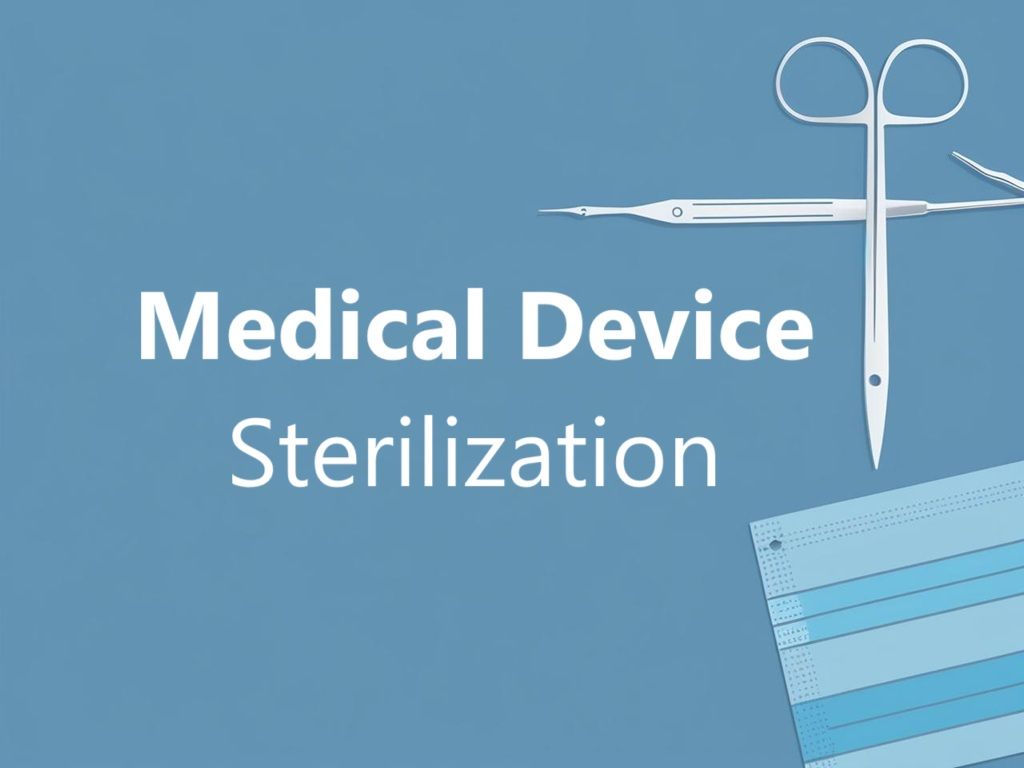
Also, on LinkedIn, unlike other social networks, there is a much higher ratio of viewers to posters. What that means is your posts have a higher level of visibility than on other platforms.
2) “Low engagement” technical posts created my best connections
Some of my most useful outcomes came from posts that weren’t breakout performers. Just like the sterilization post above, another post attempting to crowd source information on mechanical performance data on the FormLabs Tough2000 printable resin after Gamma irradiation sterilization led to not one, but two, separate people from FormLabs offering performance data on the very similar Tough1500 resin. Another person reached out as well letting me know how his Tough2000 at work become more brittle after 5 years on the shelf. No one commented and just five folks hit the emoticon reaction.
A surgeon or senior engineer doesn’t always “like” a post. Sometimes they:
- save it,
- forward it,
- or DM you with a real question or to offer a solution.
That’s not vanity engagement — that’s signal.
3) Polls and posts asking questions got crickets
I've tried a few posts trying to crowdsource information and a couple posts that utilized LinkedIn's native Polling feature. These were my very lowest engagement posts, and I don't know that anyone silently cared or benefitted from them either...aside from the FormLabs post on Gamma sterilization data I just mentioned above.
I'd say, feel free to try asks of your network, but keep them as short and clear as possible...and don't expect too much.
4) Shout Out Posts!
Having posts 'shouting out' appreciation for other professionals was a satisfying way to say thanks, with some professional recognition and visibility, to the folks that did a favor for me (like all of the guest professionals that spoke to the Additive Manufacturing class I taught at Saint Louis University in 2024), or folks that had me on site for a factory tour.
 Josh Adams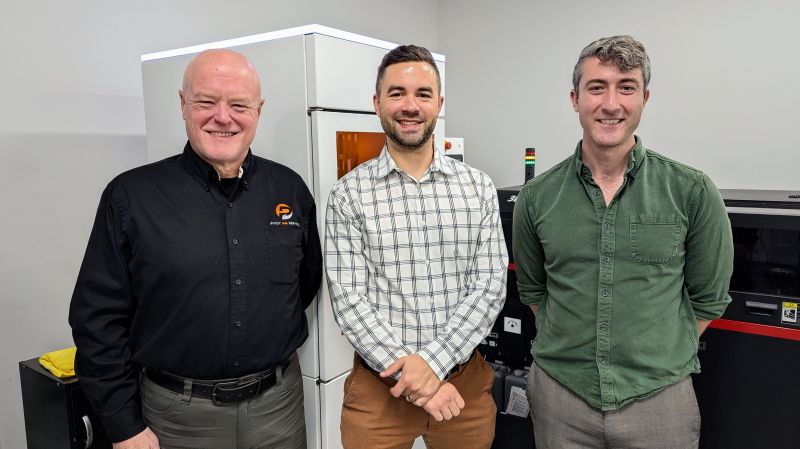
This post with Jim and Nate after visiting the Nota3D facility lead to one of Jim's connections reaching out to introduce himself to me. He ended up connecting me to an titanium additive manufacturing vendor that I’m starting to work with on orthopedic implant.
5) Don't post politics on LinkedIn
I'm all for meaningful and nuanced political discourse, however, spamming your LinkedIn feed with political views is a zero sum game for impact and your reputation. That said, if there is something truly relevant to your work, that's fair game. For me, I was genuinely curious how the significant and high uncertainty tariff's that the US Administration was putting in place in Feb, 2025 were effecting other businesses (I source globally and was in the process of making some sourcing decisions at that time).
Several folks reached out to discuss in DMs. One of whom was a Vietnamese manufacturing business owner who message back and forth with me for a several weeks where we both shared our candid thoughts as professionals in the space--It was a fascinating and informative exchange.
Part 2: What I learned about crafting your profile and growing your network
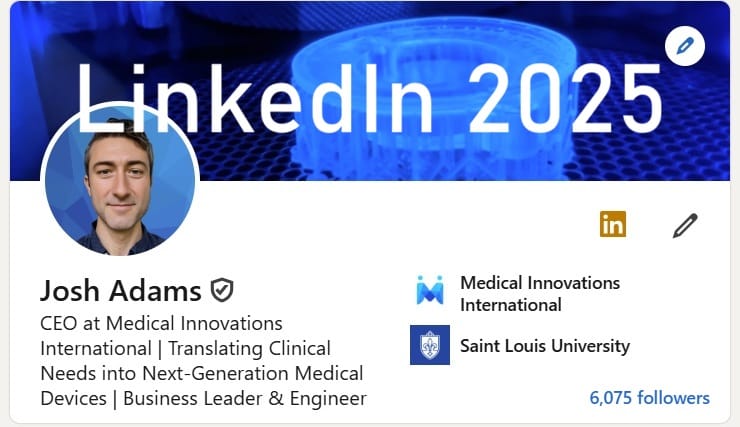
1) The first ~40 characters of your Headline are very important
These are what people will see on the “My Network” tab of their LinkedIn with all of the recommended connections LinkedIn creates for Users--I found the headline to be far more important than the profile image for choosing whether or not to send a connection request.
You can have a long headline, but only some of it will be visible in most scenarios. For example, my current headline is below with only the bolded part visible for most folks making a snap decision:
CEO at Medical Innovations International | Translating Clinical Needs into Next-Generation Medical Devices | Business Leader & Engineer
2) Search for new connections in:
Although LinkedIn 'Advises' not to connect with people you don't know, I take that with a grain of salt. Of course, don't accept a connection from someone with an irrelevant title, no profile picture and 3 connections. That said, after a basic online safety filter, it's fine to accept and make connection requests to people in your professional sphere's on LinkedIn--in fact I encourage it.
Here are a few places to find new professional connections to send invitations to:
- Groups you are a part of
- Searches for Title/Profession + Location + 2nd tier connection.
- The My Network Tab under relevant headings (beware, LinkedIn always has some really irrelevant categories of connection for me, like “IT Professionals” I really don’t know why it suggests this category over Biomedical Engineers)
4) My network is high-leverage… but misaligned with my next growth goal
This one was humbling. My network is “top heavy” in a good way — lots of Founders/CEOs/Owners — and dense around major MedTech companies. That’s great for visibility and partnership gravity.
But I'm more interested now to grow my network towards becoming a known and trusted Engineer/MedTech developer that surgeons and clinical buyers want to partner with and/or purchase from.
Since my 2026 focus is sharper: grow toward human and veterinary orthopedic surgeons and clinical decision makers, and build a content engine that respects their time and earns trust.
That means shifting from:
- “Here’s a cool technical thing I made” to:
- “Here’s a clinical problem, what engineers (or my products) can do about it, and how we validate it.”
Ask yourself what are your goals (get a job/introduce your business to new customers/connect with professionals in your field?)? Who do you want to connect with that you can offer unique and valuable insights/solutions for? What are the communities that need to know you?
5) Favorite part of LinkedIn in 2025: Messages from younger engineers asking for advice
Hands down, the best part of posting more has been the mentorship pull — especially from early-career engineers who are hungry for real-world product development thinking.
It’s a good reminder that “open-source engineering” isn’t just a brand play. It’s a service: showing what’s real so other people can build faster and with fewer dead-ends.
6) Biggest Frustration on LinkedIn in 2025: Inbound DM Spam.
For me inbound messages that I didn't want came from Overseas vendors that would send me an identical message frequently saying,
"Do you have a project we can work on."
"Here's a list of all of our offerings."
I try to be polite and respond to all incoming messages, including when they are a bit sales heavy, but after a couple messages like this I tend to stop responding. The worst as having received nearly identical permutations of this message 18 times over the last couple years:
Hello Josh
Have a nice day!
Do you interesting:
Silicone O-ring,
Silicone Seals,
Silicone gasket,
Grommet
Boots&bellows
Rubber to metal bonding
Diaphragm Seals
Cups&suckers
Cap
Seals
Button
Stopper
Gaskets
Washer
Valve seat
Feet/let
Seal Strips
Hand grips
Hose/Tub/Pipe
We are manufacturer, have the competitive price,good service,we expect your any response.
Thank you!
Practical Intentions I’m carrying into 2026
1) Keep the relaxed goal to make a post every Tuesday morning
Tuesdays between 9am and noon is a good time for the engineers and surgeons I’m looking to share my posts with. This also gives me a box to check earlier in the week (and if I miss it, Wednesdays and Thursdays are just as good).
2) Put the full value in the post; move links to comments
The post should stand alone, and LinkedIn's algorithm wants us post the documents/images/videos directly on their platform without link outs. I'm going to try out just moving links to a first comment.
3) Try to prioritize ~30s videos
These were fun to make, and outperformed other post types likely due to the LinkedIn algorithm’s preference for local video. This was a random video I took on my kitchen counter for some flexible springs I design and printed…turned out being my highest Reaction post in 2025 and lead to several direct message connections with some an engineer who makes springs and offered his advice, and a reconnect with college friend who’s now at an aerospace company.
 Jonathan Kolodner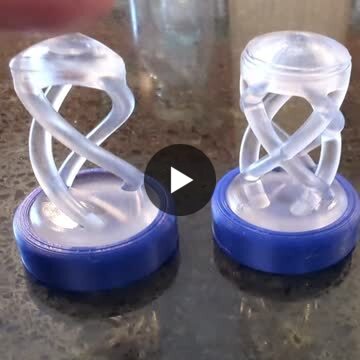
4) Spend 20 minutes/week commenting on surgeon + engineer founder posts
In 2025 I focused on keeping up making posts, but I’d like to block in a 20 minute session each week to engage more by commenting on posts of people in my network and in the MedTech Groups I’m a part of. I’ve really appreciated when folks have commented on my posts, and I’d like to connect more and contribute.
5) Aim towards being well-known vs. known well
I really appreciated the frame work from Shaan Puri about his goal in content creation:
Most people want to be famous. But I have a different goal.
I don’t want to be well known. I want to be known well.
What does it mean to know me well? I have to share stories, hopes, dreams, fears, & obsessions. I call these the 5D’s.
*Done - what have I done? what's my track record?
*Deliver - what do I offer people who follow me?
*Do - what do I do for work? for fun?
*Dreams - what am I shooting for? what’s the dream? (eg. Gary V wants to buy the Jets)
*Dork Out - what am I really into? what do I collect?
--From Shaan Puri Post
Some of my most “known well” moments didn’t come from my biggest posts. They came from:
- The early career biomedical engineer who reached out for a consult about additive manufacturing an anatomical model and later asked about a job at my business.
For 2026, I want fewer drive-by likes and more high-trust micro-relationships that could turn into something more — especially with human and veterinary surgeons.
Closing
The most important takeaway from 2012–2025 isn’t that I “grew my LinkedIn.”
It’s that I finally started treating it like what it is:
A credibility engine — where consistent, honest technical work turns into relationships… and relationships turn into opportunities that no outbound campaign can replicate.
In 2026, I’m optimizing less for reach and more for being known well — especially by the surgeons and clinical teams I create products with and for.
And if you've made it this far, pop over and send me a connection request on LinkedIn: https://www.linkedin.com/in/adams8/